

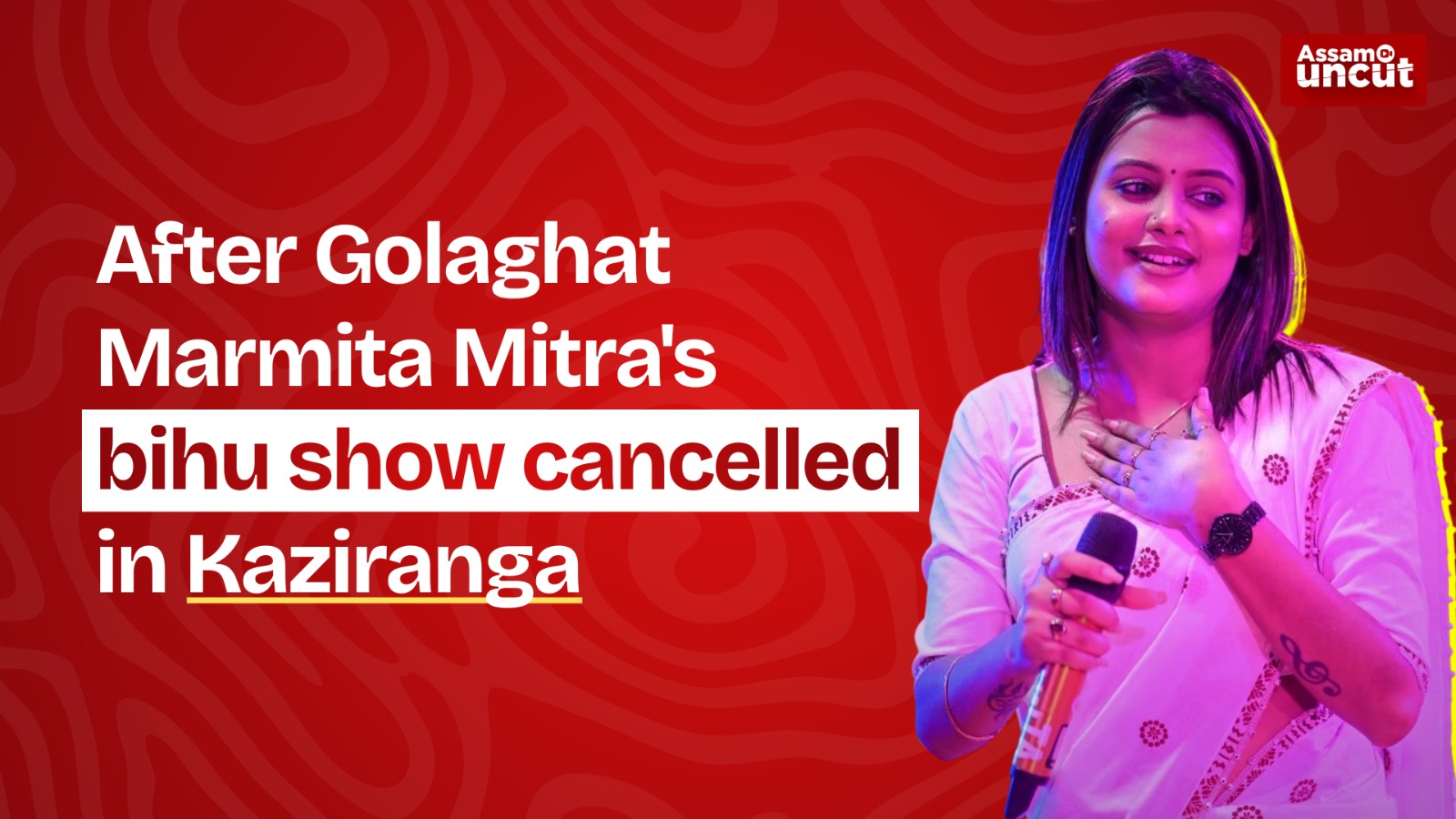
Bengal girl Marmita Mitra singing Zubeen Garg’s “Bahi Bahi” “Mayabini” and other legendary songs in a distorted way has sparked controversy and anger amongst the Zubeen fans and the family , which is led to an extent where another bihu committee in Kaziranga to cancel her show after her previous show in Golaghat was cancelled.
The controversy involving singer Marmita Mitra during the 2026 Rongali Bihu celebrations intensified against the emotional backdrop following the passing of Zubeen Garg in 2025. Her renditions of some of his iconic songs drew sharp criticism from sections of the public, who felt the performances deviated from the original compositions and failed to uphold their cultural essence. As the issue gained momentum, several student and cultural organisations raised concerns, urging artists to treat such legacy works with greater care and sensitivity.
Among the strongest reactions came from Utpal Sarma, president of the All Assam Students’ Union (AASU), who publicly demanded an apology and stressed that songs associated with Zubeen Garg are an integral part of Assamese identity. He stated that any form of distortion or careless presentation of such music, especially during a culturally significant festival like Rongali Bihu, was unacceptable and hurt public sentiment.
The controversy soon translated into concrete action. The All Assam Youth Union (AAYU) lodged an FIR at Dispur Police Station, and multiple event organisers cancelled her scheduled performances, including one in Golaghat, citing rising public pressure. The situation was further amplified on social media, where videos of the performances circulated widely, drawing criticism from fans and cultural observers.
Facing mounting backlash, Mitra issued a public apology, clarifying that she had no intention of offending the sentiments of the Assamese people. This followed an appeal from Zubeen Garg’s sister, Palmee Borthakur, who urged performers to retain the originality and emotional depth of his songs.
Although tensions have eased somewhat, the episode continues to resonate in cultural discussions across Assam. It has sparked a wider debate on the balance between artistic freedom and responsibility, particularly when interpreting works that hold deep emotional and cultural significance.