
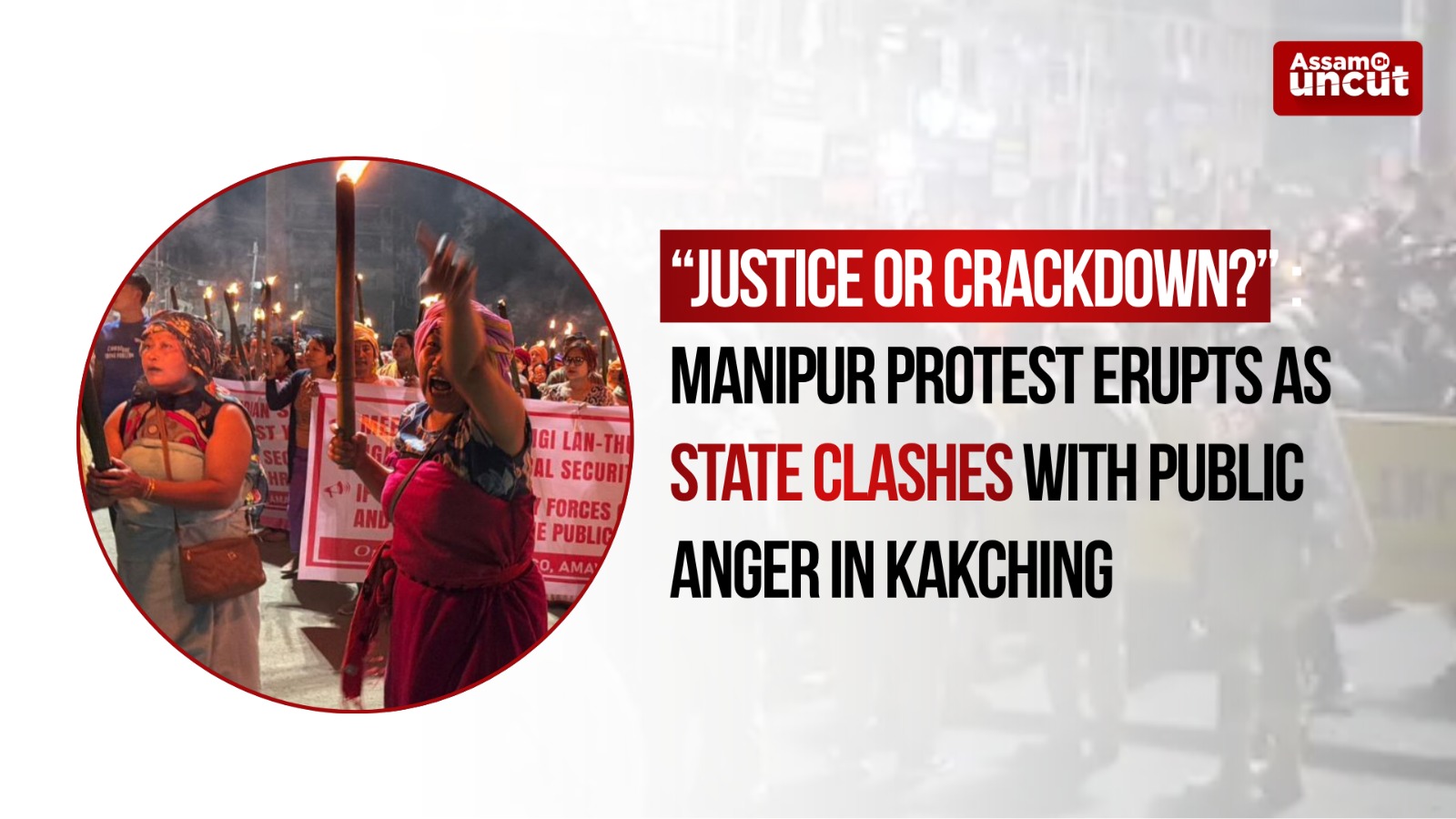
“Justice or Crackdown?”: Manipur Protest Erupts as State Clashes with Public Anger in Kakching
A deepening trust deficit between the state and its citizens played out violently on the streets of Kakching on Sunday night, as security forces cracked down on a Meira (torch) rally with tear gas, smoke bombs, and stun grenades.
The protest was sparked by outrage over the killing of a five-year-old boy and his infant sister in Tronglaobi Awang Leikai — a tragedy that has ignited grief and anger across Manipur. But what began as a public demand for justice quickly turned into a confrontation over state authority.
“We stepped out for justice, not confrontation. But the state chose force over answers,” said a protester, framing the growing anger on the ground.
Hundreds attempted to march towards the Deputy Commissioner’s office, but were stopped near Kakching Keithel bridge by heavy barricading and a strong police presence. When protesters tried to move forward, clashes erupted.
Security forces responded with crowd-control measures, firing tear gas and deploying stun grenades. Protesters retaliated with stone-pelting, escalating the standoff.
“We cannot allow lawlessness under the guise of protest. When security personnel are targeted, action becomes necessary,” a senior official from the Manipur Police said, defending the crackdown.
But voices from the ground tell a different story.
“This is the pattern — people protest, and the state responds with force. Where is accountability when lives are lost?” said a local resident, accusing authorities of silencing dissent instead of addressing the root issue.
As tensions escalated, personnel from the Rapid Action Force were deployed to contain the unrest.
Several people were injured during the clashes, including a 35-year-old woman who was hit by a tear gas shell and later shifted to hospital by volunteers from the Indian Red Cross Society.
Meanwhile, authorities maintained that protests were being “misused.”
“While many gather peacefully, certain elements are turning these protests into violent confrontations. We have seen organised attacks, use of crude weapons, and coordinated stone-pelting,” police said in an official statement.
Protesters, however, rejected the claim outright.
“Calling us ‘anti-social’ is convenient. It shifts focus away from the real issue — two children are dead, and the state has no answers,” another protester said.
The confrontation in Kakching is now being seen as more than just a law-and-order situation — it reflects a widening divide between a grieving public demanding accountability and a state increasingly relying on force to maintain control.
With security forces still on high alert, the streets remain tense — and the political questions raised by the clash are far from settled.